Dia de la Mujer Latina
Since 1997, Día de la Mujer Latina, Inc. (DML) has championed health equity by bridging gaps in health literacy and access to culturally and linguistically tailored care. Through our signature Health Fiesta, Community Health & Wellness Learning Academy (CHWLA), and Telehealth Community Navigation Contact Center, we have empowered thousands of medically underserved individuals, particularly Latinas, to take charge of their health.

Health Fiesta Community Outreach
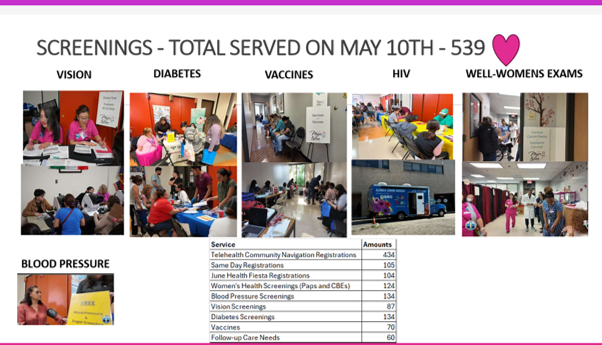
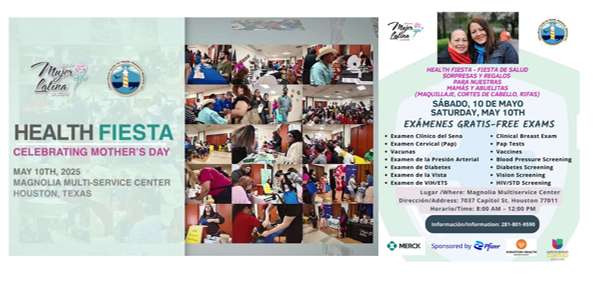
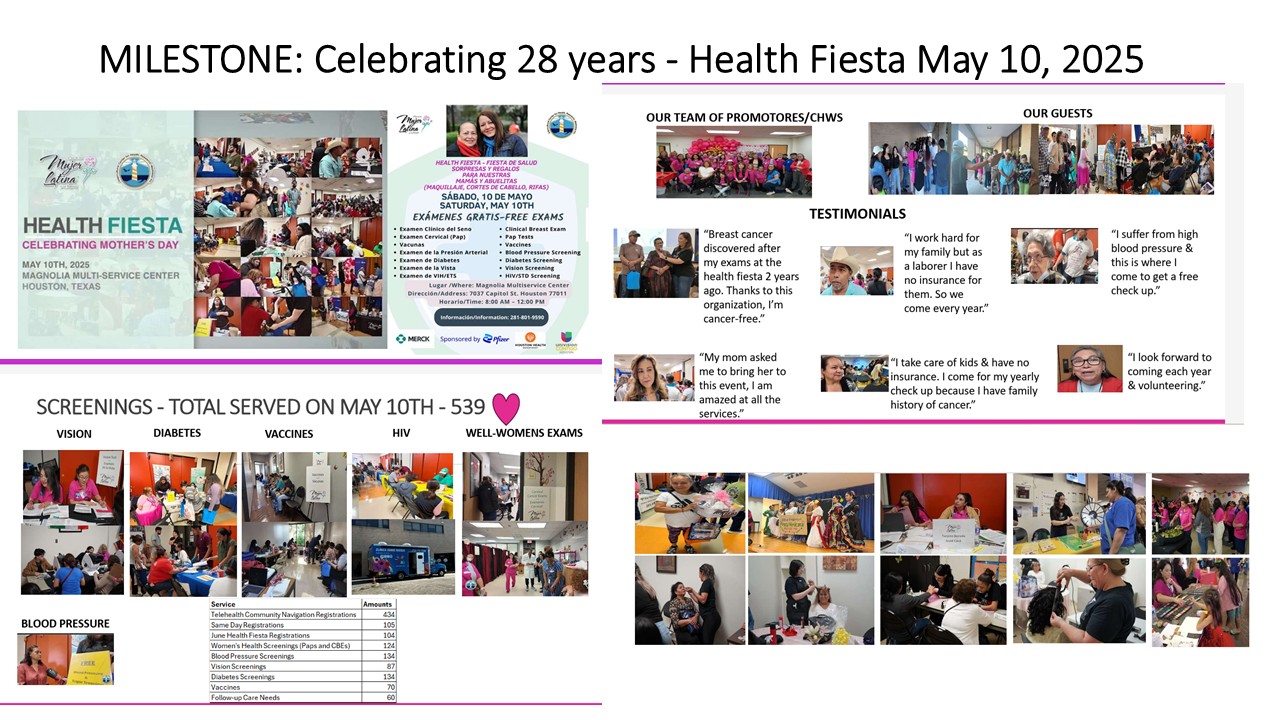
Our Signature Health Fiesta was a divinely inspired concept to motivate our Latinas to get early-detection screening for breast and cervical cancer and other chronic diseases, and to inform them about local resources, navigated by a dedicated Patient-Centered Navigation team led by a Cuban oncologist and a Mexican American nurse navigator. Following our standard of “Commitment vs Convenience.” The health fiestas have been celebrated in 43 states, Puerto Rico, the Dominican Republic, and Mexico. In December 2023, we accounted for 398,000 people who received our services.
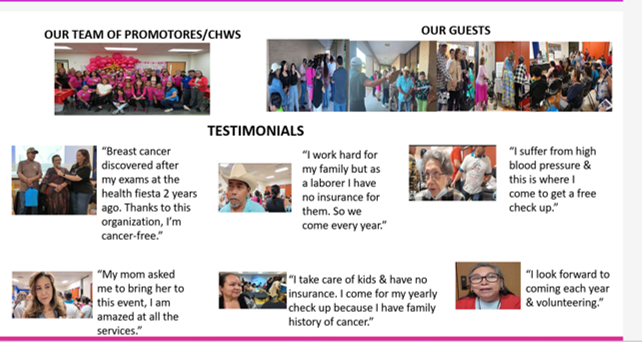
Since 1997, DML has embarked on innovative training for Promotoras/Community Health Workers for our 1st health fiesta, many serving in a variety of capacities to ensure that all who attend were navigated to the right site for screening. The P/CHW training is a Texas-sponsored certificate program that includes 8 Core Competencies, experiential learning, and, often, workforce opportunities. As of 2026, we have trained and certified more than 20,000 P/CHWs.
CHW/Promotores Certification
Our Cultural Translation team of Community Health Workers represents a geographic footprint spanning 7 countries (Puerto Rico, Mexico, Colombia, Venezuela, Costa Rica, and Cuba). They ensure the verbal and written patient-centered communications from our partners are culturally and linguistically appropriate to avoid misinformation, miscommunication, and medical mistrust.
Picture9
Picture8
Picture7
Website ideas (002)
Clinical Trial Community Navigator (CTCN™) Training Program: Strengthening Recruitment. Stabilizing Retention. Rebuilding Community Trust.
Bridging Clinical Research and Community with Cultural Intelligence
The Clinical Trial Community Navigator (CTCN™) Training Program prepares Promotores and Community Health Workers (CHWs) to serve as structured liaisons between clinical research teams, academic medical centers, Contract Research Organizations (CROs), sponsors, and historically underrepresented communities.
CTCNs are workforce-ready navigators trained to improve recruitment, retention, reporting, and relationship management within clinical studies.
Recruitment Optimization
- Community-embedded outreach strategies
- Culturally tailored education sessions
- Referral pipeline development
- Plain-language explanation of study purpose
- Addressing fears and misinformation
Retention Stabilization
- Barrier navigation (transportation, childcare, work conflicts)
- Ongoing participant check-ins
- Teach-back reinforcement of study procedures
- Medication and appointment adherence support
- Family engagement strategies
Reporting & Relationship Management
- Community feedback loops
- Documentation support
- Trust metrics and engagement reporting
- Sponsor and CRO communication alignment
Core Curriculum Components
- Clinical Study Literacy
- Ethics & Historical Context (Nuremberg Code, Tuskegee Study, Belmont Report)
- Informed Consent Navigation
- Myth-Dispelling Frameworks
- Cultural Humility & Respectful Communication
- Recruitment Support Strategies
- Retention Follow-Up Models
- Participant Checklist Coaching
- Reporting & Data Support
- Community Engagement Planning
Workforce Development & Professional Standards
- Aligns with Community Health Worker Core Competencies
- Supports structured continuing education objectives
- Reinforces adult learning principles
- Includes Pre/Post Assessments
- Provides Instructor Guides and Case Vignettes
- Available in 4-hour, 8-hour, or multi-day intensive formats
The CTCN™ Difference
CTCNs do not replace research staff. They enhance them by translating complex clinical language into plain language, building trust before enrollment begins, staying connected throughout the study, reducing drop-out risk, and providing structured community insight.
Outcomes & Impact
- Improved community engagement
- Stronger referral pipelines
- Increased participant understanding
- Better retention rates
- Measurable trust indicators
- Enhanced sponsor-community relationships
For more information on the Clinical Trial Community Navigator Training Program please contact Richard Gines at director@diadelamujerlatina.org
Disease-Specific Training Series:<br /> Empowering Promotores & Community Health Workers Through Focused Clinical Knowledge
-
Building Disease Literacy. Strengthening Navigation. Transforming Outcomes.
Our Disease-Specific Training Modules are designed for Promotores, Community Health Workers (P/CHWs), patient navigators, faith-based leaders, and frontline health advocates seeking deeper knowledge of chronic and high-impact health conditions.
Each module provides practical, plain-language clinical education combined with culturally responsive navigation strategies that improve early detection, treatment adherence, and community trust.
Example Module: Cardiovascular Disease
This module prepares CHWs to understand the connection between Hypertension, Diabetes, LDL (“bad cholesterol”), Obesity, Stroke, and Heart Attack.
Participants learn how conditions interact, how early warning signs present, and how to intervene through education and navigation.
Each Disease-Specific Training Module Includes:
- Clear Definition of the Disease – Plain-language explanations CHWs can confidently use.
- Risk Factors & Warning Signs – Early symptom recognition and silent risk identification.
- Screening Guidelines – When and how individuals should be screened.
- Diagnosis Overview – Understanding lab values, imaging, and provider terminology.
- Treatment in Plain Language – Medications, lifestyle strategies, and advanced therapies explained simply.
- Navigation Pathways & Referral Strategies – Connecting clients to clinics, specialists, medication programs, and resources.
- Culturally Responsive Education Strategies – Respecting food traditions, belief systems, and lived experience.
- Community Case Examples & Vignettes – Real-world scenarios for skill practice.
- Pre- and Post-Learning Assessments – Measurable outcomes supporting workforce standards and CE documentation.
Designed for Workforce Development
- Align with Texas Department of State Health Services (DSHS) continuing education standards.
- Support CHW core competencies (Communication, Advocacy, Service Coordination, Teaching, Capacity Building).
- Reinforce adult learning principles.
- Include Instructor Guides, Slide Decks, and Evaluation Plans.
- Available in 2-hour, 4-hour, or 8-hour CE formats. (8-hour receives Certificate as Cardiovascular Community Navigator)
Available & Developing Modules Include:
- Asthma & Respiratory Health
- Behavioral Health Navigation
- Lupus and other Inflammatory Disease
- Clinical Studies Education & Clinical Trial Community Navigation
- Maternal & Women’s Health
- Additional chronic disease topics available upon request
Why It Matters
Chronic diseases often begin silently. Communities frequently face barriers related to cost, access, mistrust, and language. Promotores and Community Health Workers are trusted voices who can break cycles of misinformation, promote early detection, support treatment adherence, reduce preventable complications, and strengthen health system trust.
For more information on the Disease Specific Training Programs please contact Richard Gines at director@diadelamujerlatina.org
Patient-Centered Navigator Training Program: Promotores & Community Health Workers as Patient-Centered Navigators
-
Guiding Patients Through Complex Healthcare Systems with Compassion & Coordination
The Patient-Centered Navigator Training prepares Promotores and Community Health Workers (P/CHWs) to guide individuals and families through the healthcare system from outreach and diagnosis to treatment, survivorship, and supportive care.
Grounded in the original patient navigation model established in 1990 and expanded through national legislation, this training strengthens case management, care coordination, advocacy, and culturally responsive engagement skills.
Core Roles of Patient-Centered Navigators
- Education & Information – Explaining diagnoses, treatment options, and care plans in plain language.
- Care Coordination – Scheduling appointments, organizing referrals, and ensuring continuity of care.
- Resource Linkage – Connecting patients to financial, transportation, housing, and community resources.
- Emotional & Psychosocial Support – Helping patients cope with stress, fear, and uncertainty.
- Advocacy – Communicating patient needs and preferences to healthcare teams.
- Follow-Up & Monitoring – Ensuring adherence to treatment plans and follow-up appointments.
Types of Patient Navigation Covered
- Disease-Specific Navigation (e.g., oncology, chronic disease)
- Community-Based Navigation
- System-Based Navigation (hospital/clinic settings)
- Barriers-Specific Navigation (financial, transportation, language)
- Preventive Care Navigation (screenings & vaccinations)
- Behavioral Health Navigation
- End-of-Life & Survivorship Navigation
Key Training Components
- Screening & Diagnostic Navigation
- Treatment Plan Support & Medication Understanding
- Survivorship Planning & Long-Term Follow-Up
- Financial Navigation & Insurance Education
- Care Coordination & Case Management
- Documentation & Record Keeping Standards
- Technology in Navigation (EHRs, Telehealth, Patient Portals)
- Addressing Social Determinants of Health
- Cultural Competence & Cultural Humility
- Development of Personalized Care Plans
- Pre/Post Learning Assessments & Case Vignettes
Professional Boundaries
Patient-Centered Navigators do NOT diagnose, prescribe medications, provide medical advice, perform medical procedures, or accept payment for services. Their role is supportive, educational, coordinative, and advocacy-based.
Workforce & Policy Alignment
- Aligns with CHW Core Competencies
- Supports care coordination and case management standards
- Reflects national patient navigation legislation
- Addresses CMS reimbursement developments for navigation services
- Available in 4-hour, 8-hour, and multi-session CE formats
Why Patient Navigation Matters
- Improves patient experience and satisfaction
- Increases treatment adherence and health outcomes
- Reduces fragmentation of care
- Addresses social determinants of health
- Reduces preventable hospitalizations and healthcare costs
- Builds trust in healthcare systems
For more information on the Patient Centered Navigator Training Program please contact Richard Gines at director@diadelamujerlatina.org
Vaccination Community Navigator Training Program: Promotores & Community Health Workers Strengthening Vaccine Consideration<br />
-
Preparing Trusted Community Voices to Protect Public Health
The Vaccination Community Navigator Training prepares Promotores and Community Health Workers (P/CHWs) to serve as trusted educators, motivators, and navigators in their communities. This structured 6-hour curriculum equips frontline workers with accurate vaccine knowledge, communication tools, and navigation strategies to increase vaccine confidence and improve access to services.
Grounded in public health history and current vaccination challenges, this training addresses the past, present, and future of immunization while strengthening community trust and informed decision-making.
Core Learning Objectives
- Discuss the past, present, and future of vaccination, including lessons from the COVID-19 pandemic.
- Explain how vaccines are developed, tested, authorized, and monitored for safety in the United States.
- Describe recommended vaccine schedules across the lifespan.
- Debunk vaccine misinformation using research-backed communication strategies.
- Navigate individuals and families to vaccination services in their communities.
- Promote vaccine confidence through culturally responsive conversations.
Curriculum Structure (6 Hours)
- Module 1: The Past, Present, and Future of Vaccination – Vaccine history, public health successes (e.g., smallpox eradication), COVID-19 impact on trust, and resurgence of preventable diseases.
- Module 2: How Vaccines Work & Vaccine Policy – Immune response basics, safety monitoring, development processes, recommended schedules, and current policy considerations.
- Module 3: Debunking Misinformation & Building Vaccine Confidence – CASE approach, confidence spectrum, identifying misinformation tactics, and practical response tools.
- Module 4: Navigating Communities to Vaccine Services – Identifying local vaccine sites, public programs (e.g., Vaccines for Children, Medicare, ACA coverage), 2-1-1 resources, and practical navigation strategies.
Core Competencies Strengthened
- Knowledge Base
- Communication Skills
- Interpersonal Skills
- Service Coordination
- Advocacy & Community Education
Why Vaccination Community Navigation Matters
- Rebuilds confidence following pandemic-related disruptions.
- Addresses misinformation in both in-person and online spaces.
- Improves timely vaccination across children, adolescents, adults, and seniors.
- Supports improved access through navigation and resource connection.
- Strengthens public health infrastructure through trusted community partnerships.
For more information on the Vaccination Community Navigator Training Program please contact Richard Gines at director@diadelamujerlatina.org
Behavioral Health Community Navigator Training Series: Anxiety • Depression • Stigma • Stress
-
Program Overview
This Behavioral Health Community Navigator Training Series prepares Promotores and Community Health Workers (P/CHWs) to recognize, educate, support, and navigate individuals experiencing common behavioral health challenges. The curriculum strengthens early identification, culturally responsive communication, and referral pathways while reinforcing the 8 Texas CHW Core Competencies.
Each module may be delivered as a stand‑alone training or as part of a comprehensive Behavioral Health Navigation certification series.
Training Modules
- Anxiety – Definition, types of anxiety disorders, panic attacks, risk factors, warning signs, impact on community/work/family, mind-body-spirit connection, and navigation to appropriate care.
- Depression – Major depressive disorder, persistent depressive disorder, perinatal and seasonal depression, signs and symptoms, impact on work and family systems, suicide risk awareness, and treatment overview in plain language.
- Stigma – Understanding implicit bias, public and self-stigma, discrimination, health disparities, communication barriers, and strategies to reduce stigma in healthcare and community settings.
- Stress – The biology of stress (fight or flight response), warning signs, impact on body systems (cardiovascular, immune, digestive, reproductive), coping strategies, and prevention through healthy lifestyle habits.
Each Module Includes:
- Plain language definitions and explanations
- Risk factors and warning signs
- Community, family, work, mind, body, and spirit impact analysis
- Crisis indicators and referral guidance (including 988 Suicide & Crisis Lifeline)
- Navigation pathways and local resource mapping
- Community case examples and vignettes
- Application of the 8 Texas CHW Core Competencies
- Pre/Post learning assessments
Core Competencies Strengthened
- Communication Skills
- Interpersonal Skills
- Service Coordination
- Capacity Building
- Advocacy
- Teaching Skills
- Organizational Skills
- Knowledge Base on Specific Health Issues
Workforce Development Alignment
The Behavioral Health Community Navigator Training Series aligns with workforce development standards and supports continuing education objectives of the Texas Department of State Health Services (DSHS). The curriculum reinforces Mental Health First Aid principles, prevention strategies, early identification, and community-based referral systems.
Empowering Trusted Community Voices to Support Mental Health, Reduce Stigma, and Strengthen Community Resilience.
For more information on the Behavioral Health Community Navigator Training Program please contact Richard Gines at director@diadelamujerlatina.org
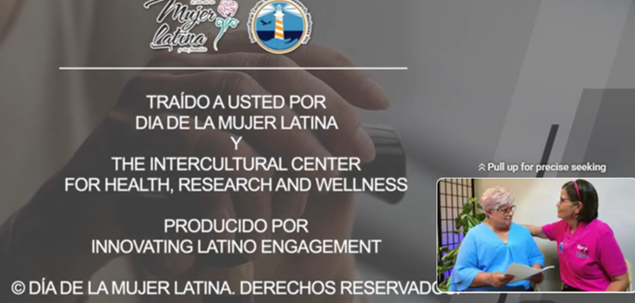
Parkinsons

Mental Health
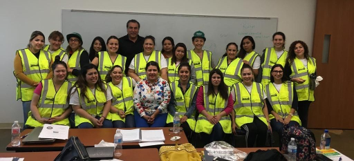
Emergency Preparedness
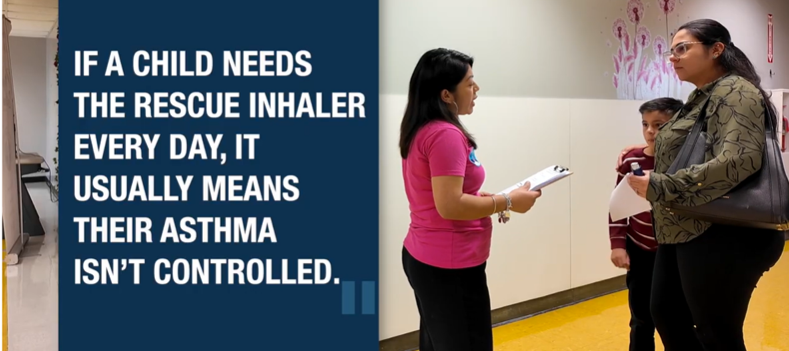
Asthma
Clinical Trials
Get in Touch. Get Involved.
 English