Community Health & Wellness Learning Academy
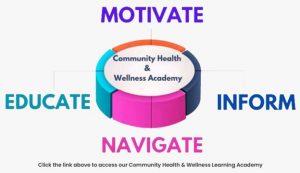
Our Disease-Specific Training modules are designed to strengthen the capacity of Community Health Workers (CHWs) and Promotores to address significant health conditions in the communities they serve.
These structured learning modules provide practical, evidence-informed knowledge on prevention, early detection, risk factors, symptom recognition, treatment pathways, and navigation strategies.
Each module integrates community engagement, plain-language communication, and referral coordination, ensuring that CHWs are equipped not only with knowledge but with practical application skills.
Each disease-specific training module includes:
Defining each disease
Its risk factors and warning signs/symptoms
Screening guidelines
Diagnosis
Treatment overview (in plain language)
Navigation pathways and referral strategies
Culturally responsive education strategies
Community case examples & Vignettes
Pre/Post learning assessments
Many of our modules align with workforce development standards and support the continuing education objectives of the Texas Department of State Health Services.
Core Competencies
Communication
- Understand basic principles of verbal and non-verbal communication
- Listen actively, communicate with empathy and gather information in a respectful manner
- Use language confidently and appropriately
- Identify barriers to communication
- Give information to clients and groups in a clear and concise way
- Speak and write in client’s preferred language and at appropriate literacy level
- Document activities and services and prepare written documentation
- Collect data and provide feedback to health and human services agencies, funding sources, and community-based organizations
- Gather information in a respectful manner
- Assist in interpreting and/or translating health information
Interpersonal and Relationship-Building Skills
- Represent others, their needs, and needs of the community
- Be sensitive, honest, respectful, and empathetic
- Establish relationships, and assist in individual and group conflict resolution
- Understand basic principles of culture, cultural competency, and cultural humility
- Recognize and appropriately respond to the beliefs, values, cultures, and languages of the populations served
- Set personal and professional boundaries and respect professional standards
- Provide informal counseling
- Use interviewing techniques (e.g., motivational interviewing)
- Work as a team member
- Act within Professional and Ethical Standards in Texas Administrative Code, Section 146.7
- Maintain confidentiality of client information and act within the Health Insurance Portability and Accountability Act (HIPAA) requirements
- Model behavior change
- Network with peer CHWs in CHW associations/groups
Service Coordination and Navigation Skills
- Identify and access resources and maintain a current resource inventory
- Help improve access to resources
- Conduct outreach to encourage participation in health events
- Coordinate CHW activities with clinical and other community services
- Develop networks to address community needs
- Coordinate appropriate referrals, follow-up, track care and referral outcomes
- Help others navigate services and resources in health and human services systems
- Provide education, assessment and social support to clients and communities
- Plan and facilitate individual and organizational goals and/or group action plan and goal attainment
Capacity Building
- Identify problems and resources to encourage and help clients solve problems themselves
- Collaborate with local partnerships to improve services, network and build community connections
- Learn new and better ways of serving the community through formal and informal training
- Assess the strengths and needs of the community
- Build leadership skills for yourself and others in the community
- Facilitate support groups
- Organize with others in the community to address health issues or other needs/concerns
- Collect and use information from and with community members
Advocacy
- Participate in organizing others, use existing resources, and current data to promote a cause
- Identify and work with advocacy groups
- Inform health and social service systems and carry out mandatory reporting requirements
- Stay abreast of structural and policy changes in the community and in health and social services systems
- Speak up for individuals or communities to overcome intimidation and other barriers
- Utilize coping strategies for managing stress and staying healthy
Teaching and Education Skills
- Use methods that promote learning and positive behavior change
- Use a variety of interactive teaching and coaching methods for different learning styles and ages
- Organize presentation materials
- Identify and explain training and education goals and objectives
- Plan and lead classes
- Evaluate the success of an educational program and measure the progress of individual learners
- Use audiovisual materials and equipment to enhance teaching
- Prepare and distribute education materials and present at community events
- Facilitate group discussions and decision making in ways that engage and motivate learners
Organization Skills
- Plan and set individual and organization goals
- Plan and set up presentations, educational/training sessions, workshops, and other activities
- Effectively manage time and prioritize activities, yet stay flexible
- Maintain and contribute to a safe working environment
- Gather, document, and report on activities within legal and organization guidelines
Knowledge-Based
- Gain and share basic knowledge of the community, health and social services, specific health issues
- Understand non-medical drivers of health and health disparities
- Stay current on health issues affecting clients and know where to find answers to difficult questions
- Understand consumer rights pertaining to federal and state regulators and adherence to ethical standards
- Find information on specific health topics and issues across all ages [lifespan focus], including healthy lifestyles, maternal and child health, heart disease and stroke, diabetes, cancer, oral health and behavioral health
- Use and apply public health concepts
Evaluation and Research Skills
- Identify important concerns and conduct evaluation and research to better understand root causes
- Apply the evidence-based practices of Community Based Participatory Research (CBPR) and Participatory Action Research (PAR)
- Participate in evaluation and research processes
- Participate in individual assessment through observation and active inquiry
- Participate in community assessment through observation and active inquiry
- Collaborate with other educators
Health-Related Playbooks
Since 2023, DML has produced Bilingual Disease Navigation Playbooks, scalable, culturally tailored solutions designed to equip trainees with evidence-based, disease-specific knowledge and navigation tools. They integrate the following elements:
Community Health Workers and other trainees are uniquely positioned to bridge this gap, but they require disease-specific, structured training tools.
Our bilingual, culturally tailored field guide and curriculum equip trainees to:
-Understand the disease and its burden
– Explain prevention and screening guidelines
– Support treatment navigation, retention, and follow-up
– Address myths and misinformation
– Reduce barriers to care
Each Playbook includes:
– Plain-language disease overview
– Health disparities and representation gaps
– Standard of care and emerging therapies
– Communication scripts and myth vs. fact tools
– Family engagement guides
– Navigation checklists
– Outreach and community presentation templates
– Pre/Post assessment tools
Workforce Opportunities for CHW/Promotores
In addition to providing training and support, we created a pathway to meaningful workforce opportunities for Community Health Workers and Promotores. We believe that your lived experience, cultural wisdom, and frontline expertise are not only invaluable to our communities but also deserving of professional recognition, career pathways, and economic mobility. Through expanded training programs, apprenticeships, certification pathways, disease-specific navigation roles, and partnerships with healthcare systems, our goal is to open doors for sustainable employment, leadership roles, and fair compensation so that you can continue serving your communities while building stability for your own families.

Get in Touch. Get Involved.
 English